Turned parts for robots, actuators and grippers
Since 2017 we have made joint parts and omni wheels for humanoid and service robots built in China. The same lathes can run your shafts, pins and spindles.
Parts we make for robot builders
Joint and actuator shafts
Output shafts, spindles and sleeves for rotary joints and linear actuators, turned complete with shoulders, grooves and threads.
Pins and axles
Hinge pins, dowel pins and wheel axles from 0.5 mm in diameter, in stainless or free-cutting steel.
Motor and gearbox shafts
Shafts for small motors and gear motors, with knurls, flats, slots and cross-holes as drawn.
Collets and gripper fingers
Slotted collets for dispensing and coil-winding equipment, and gripper fingers for industrial manipulators.
Omni wheels
Our own 100 to 152 mm omni wheels for mobile bases. Omni wheel sizes
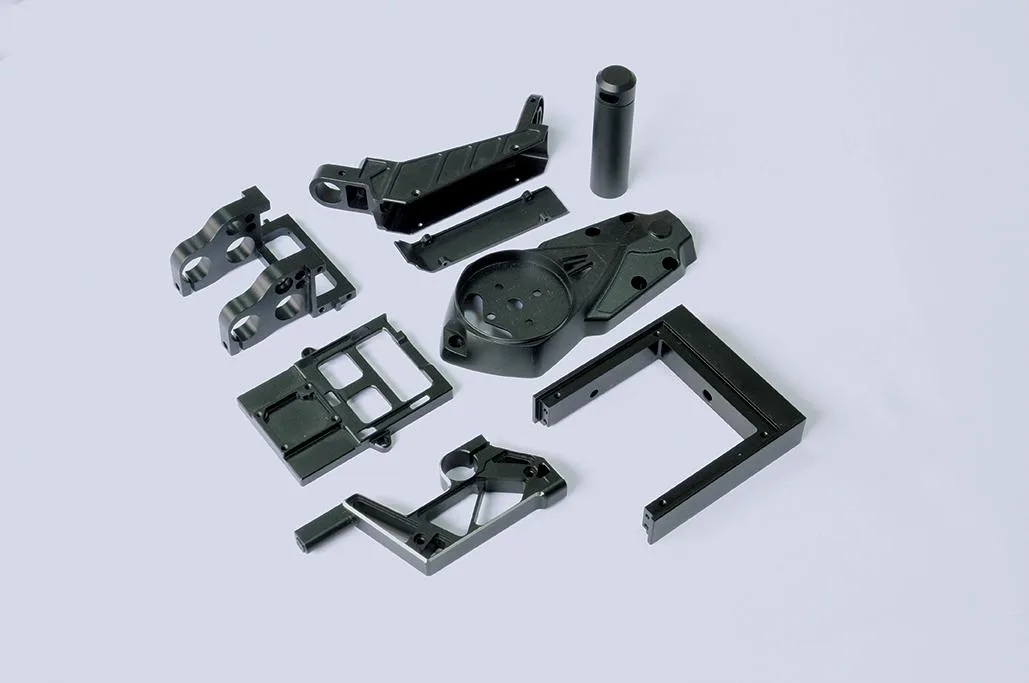
Housings and brackets
Milled aluminium parts made on our machining centres or at partner shops, delivered with the turned parts as one order.
What we have made
Our first robot parts were gripper fingers for industrial manipulators, in 2011. In 2017 we began making joint parts and omni wheels for Chinese makers of humanoid and service robots, and robot parts have been a regular part of our production since.
Other programmes have included camera gimbal parts for drones, shafts and rollers for office equipment, and valve cores for temperature controls.
Customer names are covered by confidentiality agreements. We can talk about past work in a call once an NDA is in place.
Designing a part for sliding-head turning
A few choices on the drawing decide whether a part runs economically on a sliding-head lathe.
Keep the largest diameter at or under 20 mm
That keeps the part on our Japanese sliding-head lathes. Up to 45 mm we use a different lathe.
Put tight tolerances only where the part functions
A ±0.005 mm tolerance on a bearing seat is normal work. The same tolerance on every diameter multiplies inspection time and cost.
Name the material and the reason
Free-cutting grades machine faster and cost less. If corrosion or strength rules them out, write the grade you need.
Mark surface treatment and where it must not go
Plating and anodizing change dimensions. Tell us which surfaces must be to size after treatment.
Questions from robotics teams
Do you have experience with humanoid robot parts?
Yes. We have made joint parts and omni wheels for humanoid and service robots since 2017. The customers are Chinese robot makers, and their names are confidential.
Can you supply complete joint or actuator assemblies?
No. We make the turned and milled metal parts. Bearings, gears, motors and the assembly of the joint are not our work.
Can a robotics startup order small batches?
Our standard minimum is 300 pieces per part number, with sample parts first. If you are between prototype and series and need fewer, tell us the quantity.
Do you sign NDAs?
Yes, and before you send drawings if you prefer. Tick the NDA box in the quote form.
Building a robot or an actuator?
Send the drawings for the turned parts. We reply with a quote and notes on anything that would run better with a small change.