Swiss-type CNC turning for small precision parts
Bar from 0.5 to 20 mm on eight Japanese sliding-head lathes, with four more CNC lathes, one of them for work up to 45 mm. Tolerances to ±0.005 mm on turned features.
What a sliding-head lathe does better
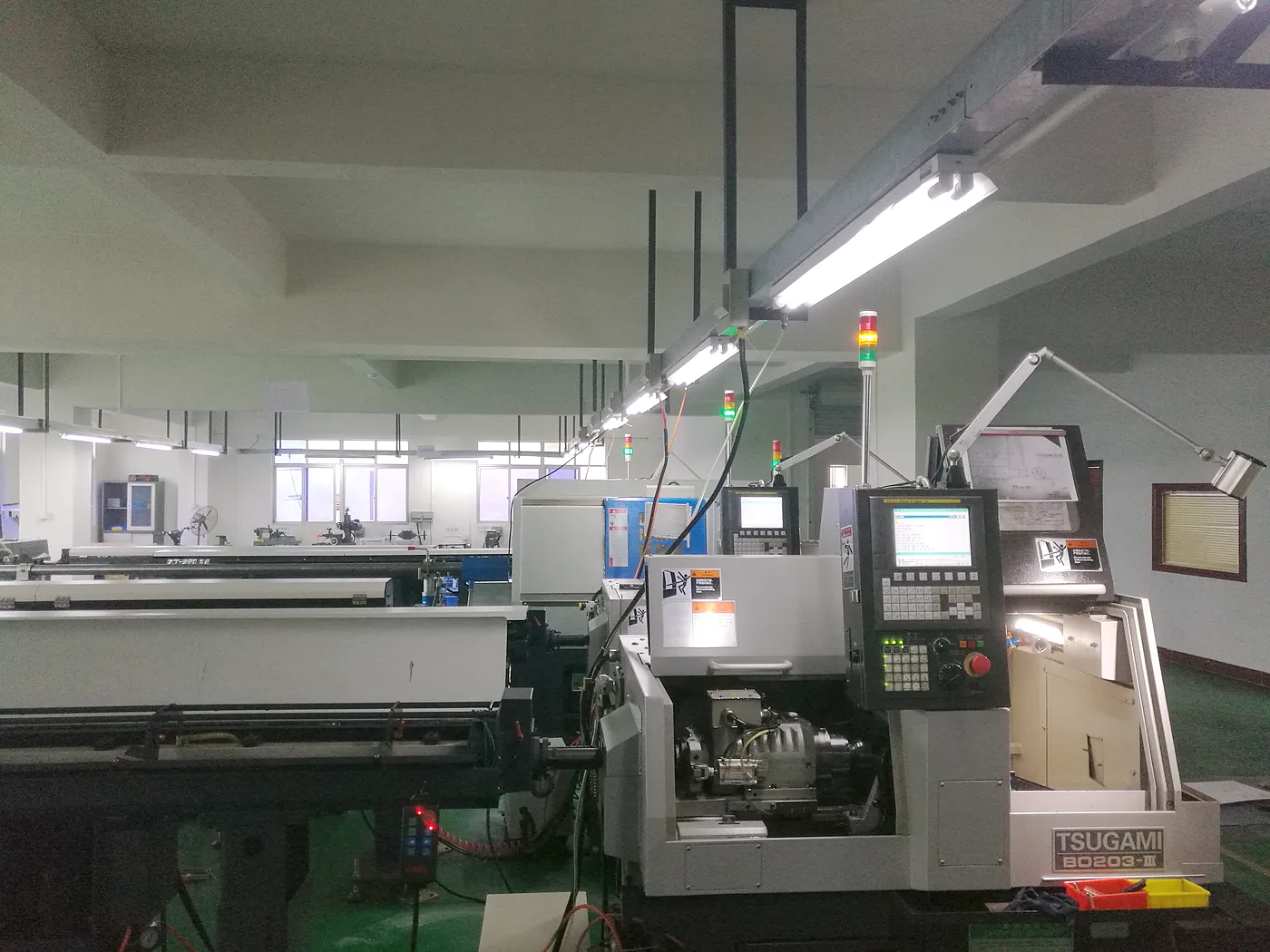
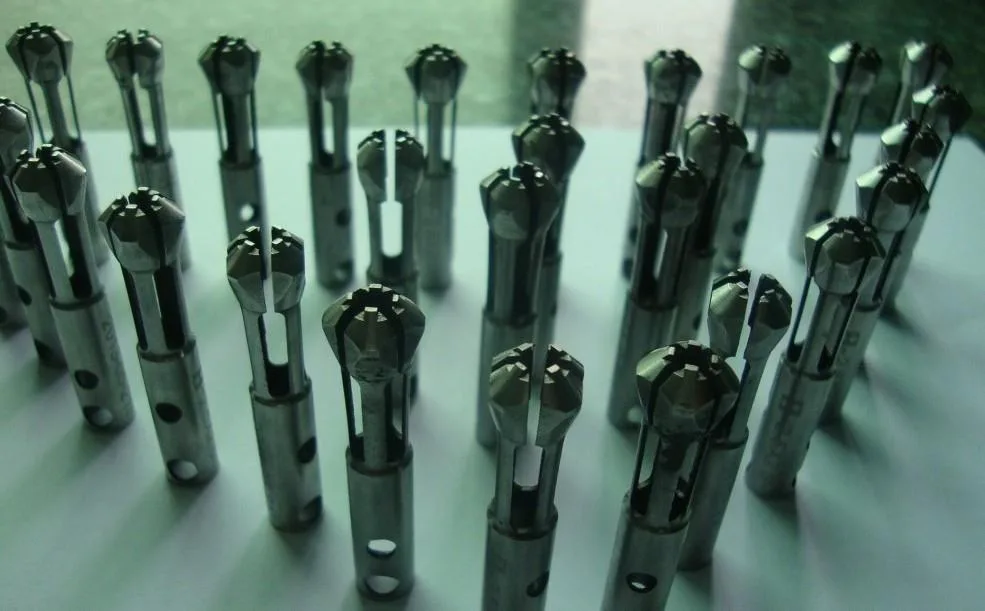
A Swiss-type lathe, also called a sliding-head lathe, feeds the bar through a guide bush and cuts right beside it. The material is supported within a few millimetres of the tool at every moment of the cut.
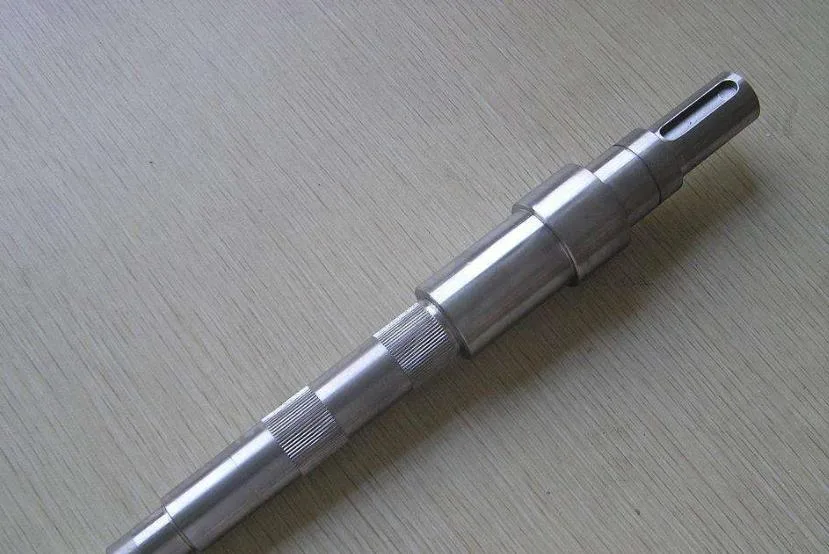
That is why this type of machine is used for long, slender parts: shafts, pins and spindles whose length is many times their diameter. On a conventional lathe such a part bends away from the tool and comes out tapered.
Two of our machines have a second spindle that takes the part over and finishes its back end, so many parts come off the machine complete in one cycle.
| Bar diameter | 0.5–20 mm on the Tsugami lathes, to 25 mm on the Citizen A20, to 45 mm on one CNC lathe |
|---|---|
| Tightest tolerance | ±0.005 mm on turned features |
| Regular materials | Stainless steel, brass, aluminium alloy, free-cutting steel |
| Milling | Four vertical machining centres in our plant, three of them 3+2-axis |
| Surface treatment | Anodizing, electroplating and painting, through partner shops |
| Minimum order | 300 pieces per part number |
| Samples | Two weeks |
| Series lead time | Agreed with each order, depending on quantity |
| Documents | Outgoing inspection report; mill certificate and substance test report on request |
| Machine | Built in | Qty | Working range |
|---|---|---|---|
| Tsugami B0205 sliding-head lathe, main and sub-spindle | Japan | 1 | Bar Ø 0.5–20 mm |
| Tsugami B0203 sliding-head lathe | Japan | 6 | Bar Ø 0.5–20 mm |
| Citizen Cincom A20 sliding-head lathe, main and sub-spindle | Japan | 1 | Bar Ø 0.5–25 mm |
| CNC lathe, 46 mm class | China | 1 | Bar Ø 0.5–45 mm |
| CNC lathe, 20 mm class | China | 3 | Bar Ø 0.5–20 mm |
| Vertical machining centre, 3+2-axis | China | 3 | 650 mm travel |
| Vertical machining centre | China | 1 | 650 mm travel |
Partner shops: not our machines
Some work is outside what our own plant does. For these processes we use partner shops and manage the order, the schedule and the final inspection ourselves. We list them separately so you know which operations leave our building.
- Five-axis machining of complex housings on Okuma, Mazak and Jingdiao machines
- High-speed finishing on Yasda and Röders machining centres
- Wire EDM and sinker EDM on AgieCharmilles machines
- Jig grinding of precise bores on a Hauser machine
- Coordinate measuring on Zeiss and Serein machines
- Anodizing, electroplating and painting
Questions about turning
What is the difference between Swiss-type and conventional CNC turning?
On a conventional lathe the bar is clamped in a chuck and the tool moves along it, so a long part is unsupported at its free end. On a Swiss-type lathe the bar itself slides through a guide bush and is cut right next to that support. The result is better straightness and size control on parts that are long relative to their diameter.
What is the longest part you can turn?
It depends on diameter, material and the features along the part. Send the drawing and we will confirm. We do not publish a single maximum length because it would be wrong for most parts.
Can you mill, drill and thread in the same setup?
Cross-holes, flats, slots and threads on turned parts are part of our normal work. Parts that are mostly milled go to our machining centres or to a partner shop.
Do you measure every part?
Each shipment has an outgoing inspection report on sampled parts. If you need every part checked on one dimension, state it on the drawing or in your request and we will quote it.
Check your part against our machines
Send the drawing. We answer with what fits, what needs discussion, and a quote.